Tuesday, May 25, 2010

How Does Your Garden Grow?

What I love about a vegetable garden is that they come in all shapes and sizes.  Take a look around on your next drive through the neighborhood, and you're sure to spot all sorts of "gardening" in all sorts of places.  Even though most of us live in a very suburban, or even urban, area, we all have roots.  What I mean is, we all have ties to a simpler time when our families relied on the land for sustenance, and some of that knowledge of the land was passed down to us and it comes out in our various gardens.

In my neigbhorhood there are a few full-fledged gardens, and by this I mean dedicated space complete with raised beds or carefully planted rows of young vegetables.  Now some of these gardens have been filled with plants purchased at Home Depot and Wal-Mart, but maybe one or two are made up of young plants nurtured from seeds carefully selected from well-respected seed catalogs.  Some of the vegetables are heirloom varieties, some have been grown by the gardener year after year, and I bet there are a few gardeners that feel like they have no idea what they're doing -- they may just really like the taste of a good, home-grown tomato.  I mean, who doesn't?

So in observing the many different forms that the modern garden shows up in, I've been thinking that it would make an interesting topic for a blog series.  Seeking out gardens wherever they may be -- obvious ones filled with tomatoes and cucumbers, bean poles and trellises; gardens tucked away in between foundation plants because that's the only place there is enough sun to produce ripe fruit or veggies; the "tub" garden; or, even the as seen on tv variety we've all come to know as the "topsy turvy" type. 

The point is that I bet we could all learn something from each other, and the more we learn, the more wide-spread back yard (or front yard) gardening would become.  I might be able to share my secret for keeping blackspot away, and the gentlemen up the street from me could share how he is able to produce such a varied crop each season from such a small plot of land.  And that random extremely hot pepper planted in another garden that is never eaten?  We'd all know why it's there, because there is one thing I do know about gardening: every plant has a purpose. 

So I'll do my best to be a collector of vegetable gardens.  A few pictures, a bit of advice from the creator -- it should give us something to think about.  And I'll also do a bit of research on local community supported agriculture for those of you who just don't have any hint of a green thumb.  Sadly, I know you're out there, but you know what else is out there?  Wonderful farmers who want to share their locally grown abundance with the the rest of us in an effort to create a truly sustainable community.  Who says the good old days are behind us?

Friday, April 23, 2010

Prepping Beds

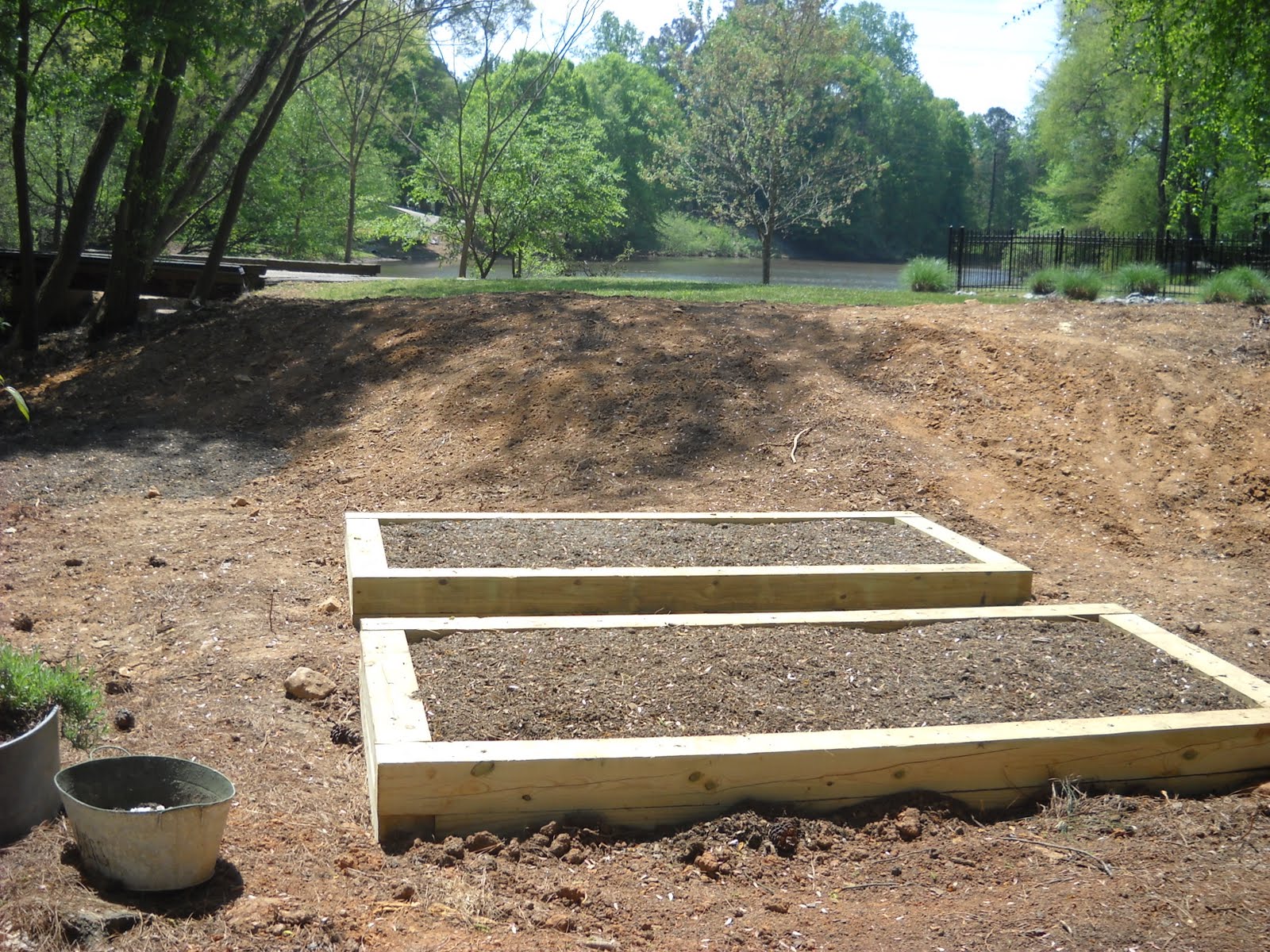
Team Turf has been busy this week prepping flower beds and picking out the best specimens from local nurseries to pack those beds full of amazing summer color.  One of the best things you can ever do when planting is to prep the area where the plant is going to be placed -- whether it be an annual flower, a perennial plant, or a vegetable.  Plants and shrubs that are pampered from the get-go are going to be your best performers, and the blooms and overall health that you will get as a result of taking a bit more time initially are definitely worth it.

In getting ready for our summer garden at home, one of the first things we always do is to clean out any leaves, debris, or weeds from the raised beds.  Step two is topdress with a nutritious mix of vegetable soil.  There are tons of different "recipes" for adding nutrients to your vegetable beds.  In fact, when we first started growing vegetables at home we simply dumped in several bags of mushroom compost from Home Depot straight into the soil and tilled it until it was nice and fresh.  Now our soil comes from Green Bros. Earth Works here in Atlanta.  Their mix of topsoil, NutraMulch, and granite sand makes a concoction that our vegetables love!  (Although we still dump in the mushroom compost from time to time -- in the middle of the growing season, your vegetables will thank you for that extra TLC).

There are always a few extras to toss in when planting certain vegetables and flowers, and every gardener has their favorite secret ingredient -- tomato plants love a bit of lime, coffee grounds worked into the soil are always a big hit for any vegetable bed, and at home we feed our roses an "ambrosia" that includes beer and fish emulsion.  A bit stinky, but it packs a big punch!

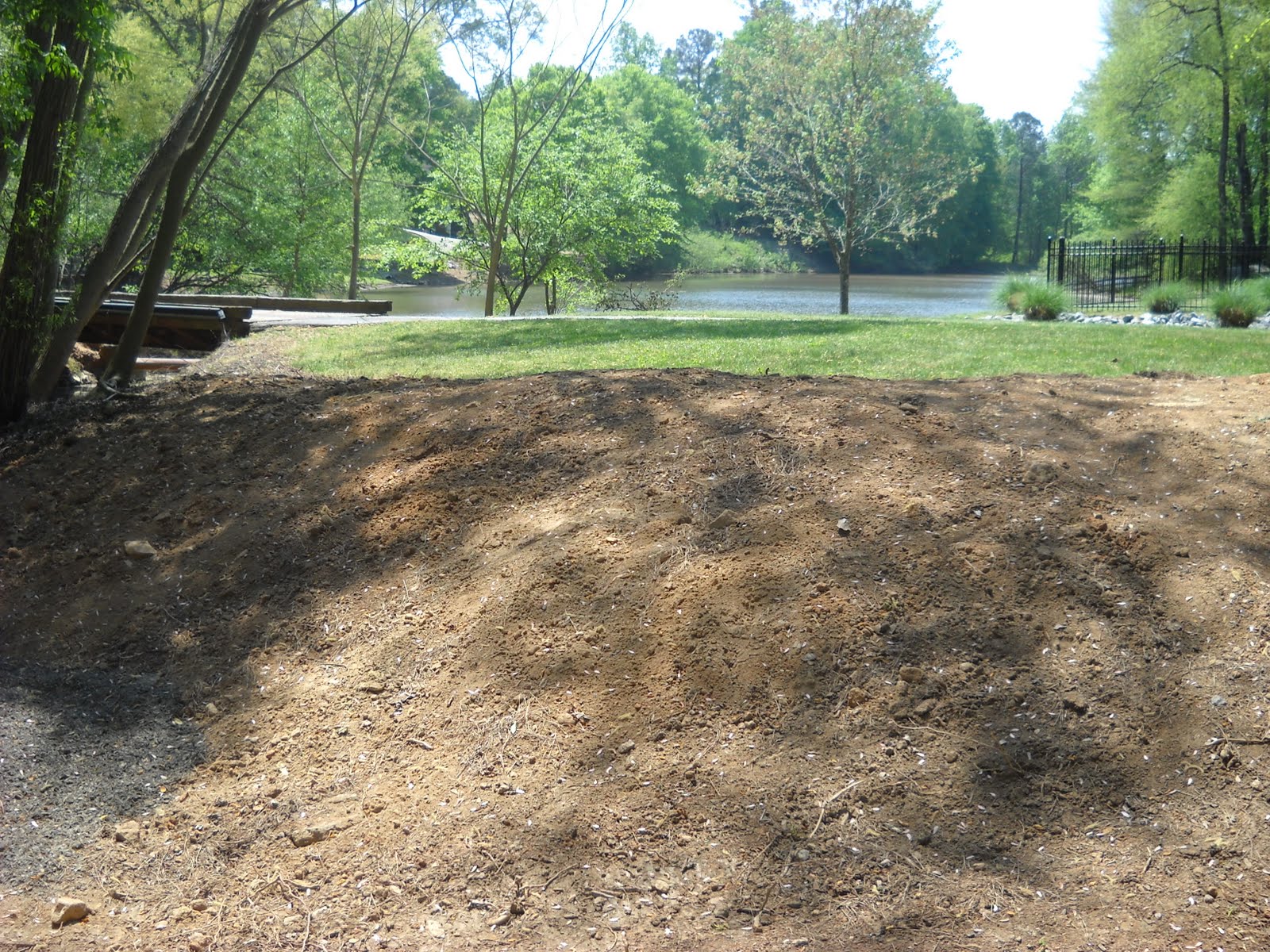
So, as promised, here are a few photos of the new raised boxes we've added to our home garden, as well as a couple of "before" photos of an area that we designed and planted last week.  In true Southern style, we've incorporated a cottage garden into our landscape complete with roses, lavender, and several other old-fashioned blooming perennials that will wow us with their color while attracting hummingbirds and butterflies in droves (we hope).  The vegetables themselves have not been added to the garden quite yet.  Seeds are sprouting in trays all around the house, and as soon as the ground is a bit warmer we'll start settling them all into their proper places.


I hope that you'll look around your yard this weekend and try to envision the potential. Where can you add a bit of color? Do you have an area that would make an inviting home for a raised vegetable bed, or an herb garden? Our children have been so excited to plant their seeds and get their hands dirty while helping us "prep" for our summer showcase, and it's a really good feeling to know that we're teaching them about being green and working the earth. Food really does taste better when you grow it in your own backyard, zinnia blossoms truly are more beautiful when you've coaxed them from seed, and passing the love of gardening -- whether on a large or small scale -- down to your children is something that will stay with you, and them, for a lifetime.


P.S.  Check back for the "after" photos -- they'll be here soon!

Monday, April 5, 2010

Food Revolution Hits Home

I know some of you have seen it -- Jamie Oliver's Food Revolution?  For those of you who haven't seen this new reality television show, it is based around renowned chef Jamie Oliver and his attempts at bringing fresh food into public school cafeterias.  I've caught a couple of episodes, and it is eye-opening and says a lot about the culture of food in our country. 

Jamie is focusing his attempts on a small West Virginian town, and during a recent episode he showed up in a Kindergarten classroom to find out how much the kids knew about eating fresh food. The answer?  Nothing!  I watched in disbelief as he held up various vegetables in their natural whole state and asked the kids to name them -- they had no idea.  Now, my three-year-old son may not eat broccoli, but he knows what one looks like for goodness sake!

Which brings me to my yard where you'll always find some variation of a kitchen garden growing each summer, and where my own campaign for healthy eating will be kicking in very soon.  My focus for this planting season is to expand our home garden to expose my family to even more fresh options -- I want to get them excited about eating homegrown veggies, and to illustrate to them that yummy food comes in other forms besides that of a chicken nugget and a side of fries.  And here's what I've got to remember and what part of the challenge will be in bringing in more fruit and vegetable yielding plants into our yard: not every one will be "pretty," nor will they all fall into the tidy category, which is the way I like my landscapes.  Sounds like this could be interesting.

My kids are pumped, though.  They've already been told that they'll have their own bit of garden to tend, and that we'll be adding some of their favorites -- strawberries, blackberries, blueberries, corn, and sunflowers -- to accompany our old standbys of cucumbers, tomatoes, peppers, and various herbs.  I think we'll even give a year-round garden a go because my daughter actually does eat broccoli (loves it, in fact), and having them involved in the preparation, planting, growing, and harvesting of their food will hopefully go a long way in teaching them about the importance of nutrition, as well as about the good feelings you get from getting out in the garden every day.  Not to mention that fresh food actually tastes good.    

So stay tuned because there will be lots of updates on my own food revolution, and it's starting this week.  The first step?  Building a few more raised vegetable beds and bringing in good soil with a healthy dose of mushroom compost and cow manure.   

Monday, March 29, 2010

A Little Bit of Inspiration

So much of what keeps yard and garden enthusiasts going is the sense of a new beginning that always arrives with Spring, and for many of us the tell-tale signs are the same -- the emergence of daffodils, The Masters and its magnificent azaleas bordering each hole, and, of course, Easter with its symbolic lilies and general message of life and rebirth.  All of this has been in the back of my mind, but this year I got hit with a big dose of inspiration during a recent family vacation. 

Let me just preface this by saying that I am constantly looking for new ideas for flowerbed design and interesting ways to use new plants, because come on, it gets a bit boring year after year seeing the same old plants in the same old front entrances, right?  Well, I also appreciate floriculture more than the average person, I'd say, and sometimes I get excited when I see a huge flower bed that requires thousands of flowers -- most people don't realize the cost and labor involved in a project like this.  In fact, one of my favorite flower beds each season is at an office park right off of 400 on the way to Perimeter Mall.  Their flower beds are always packed with blooms, and the beds themselves go on and on -- I'm usually pretty impressed.

So, last week I travelled to Walt Disney World with my family.  It was our children's first visit, and my daughter actually turned 5 while we were there, so it was magical in all the right ways.  About mid-week we trouped off to Epcot, and they just happen to be hosting the Epcot International Flower and Garden Show right now.  I was floored by the detail, the amazing use of plant materials, and the sheer number of flowers in each and every centerpiece.  We're talking topiaries depicting the likeness of many of the best-loved Disney characters, a miniature village complete with a working train, fairy houses made out of found and natural objects, an outdoor kitchen in "Italy" complete with herbs for fresco cooking, and beautiful vegetable gardens.  One of the most amazing things that I noticed was that there were beds with a mixture of cooler season perennials and summer perennials, which is not something that you normally see mainly because of the cost of using a specimen that will not last the entire season.


I became inspired almost immediately to return home and put some of what I'd seen into play in my own yard and in the yards of Team Turf clients.  We certainly don't have to be on vacation to be surrounded by outdoor beauty, and our own properties are the most ideal place to make an investment of this sort.  And while I realize that the majority of folks probably aren't yearning for a Mickey Mouse topiary in their front yard, there are more options than you'd think for incorporating some of these showstopping ideas into residential landscapes.

So for the next several weeks I'll be sharing some of the ways that we can do just that.  From raised vegetable beds that blend into your landscape, to European inspired outdoor sitting areas, to tasteful topiaries, we'll look at different ways to incorporate a bit of your personality and lifestyle into your landscape -- just remember to keep your eyes open because you never know where you'll be when inspiration strikes!

Wednesday, March 3, 2010

To Prune or Not To Prune?

That seems to always be the question, and especially in this economy, you'll want to remember that cutting back shouldn't just apply to your monthly spending.  (Sorry, bad joke).

Proper pruning and cutting back of your perennials keeps them healthy, attractive, and allows them to grow stronger and last longer.  The trick?  Knowing what you're doing before you get out the pruners.

Let's have a look at some common sights around East Cobb -- the lovely Crape Myrtle in its various stages of life.

Here is Crape Myrtle that has been left to grow without any assistance:


This is an older, established tree that unfortunately is not able to be as beautiful as it could be because its pruning needs are being ignored.  This tree doesn't need to necessarily be pruned to keep it at a certain height, but selective pruning would give it a "cleaner" look.  It is true, though, that the fate of this tree is far more favorable than being pruned incorrectly, which results in extremely unsightly specimens that suffer from stunted growth and the inability to become a full-sized, healthy Crape Myrtle.

Take a look at what some folks refer to as "Crape Murder" --


Seriously?  I am amazed and appalled every time I see this, and believe me, I see it over and over again while I'm evaluating properties or simply driving through the areas where I work and live.  A tree should not look like it is in pain, but when I see pruning jobs that leave Crape Myrtles like the ones above, I am reminded of the gnarled, arthritic hands we've all seen in horror films -- not exactly what you should be shooting for when designing a warm, welcoming landscape.

When a Crape Myrtle is pruned back too far it has two effects -- it reduces the number of blooms that will be produced during summer, and the new branches will grow far too long and therefore not be able to support the weight of heavy blooms, especially when wet.

So what should you do if you've got Crape Myrtles?  The answer is very simple: the trees should be properly pruned annually to maintain proper height, and to give them a tidier appearance.  They should not be massacred.  They should not be attacked with a chainsaw.  They should be trimmed from the bottom up, carefully removing old growth that will allow for the newer growth that will arrive with the Spring.  When a Crape Myrtle is pruned properly it will produce twice the number of strong branches and therefore twice the number of blooms as it did during the previous year.


The time to cut back is now.  Whether it's Knock-Out Roses, Lenten Rose, or Crape Myrtles, doing so means more beauty to enjoy during the flowering season.  My only advice is this -- do it right, and keep in mind that not all "professionals" know the difference between pruning and "Crape Murder."

Monday, February 1, 2010

Spring Is In the Air

Well, not exactly, but the temp is supposed to be in the mid-50s by this afternoon, and quite frankly that is almost a heat wave compared to the frigid air that has been hanging around town the past few weeks.  And we're so excited about our redesigned Web site, that we're ready to start redesigning everything -- lawns, patios, outdoor living areas, you name it! 

My wife is an avid gardener, and she's also extremely organized and loves to clean things out and redesign, which is why she loves this time of year.  A few days above 50 degrees, and she starts cutting back perennials, clearing out last year's beds, and flipping through her seed catalogs.  The end of winter signifies a clean slate for her gardening projects, and promises new growth, more potential, and lots of blossoms and produce.  (For me it usually means lots of digging, but the outcome is always worth it).

So as you look ahead to warmer months and the emergence of crocus and daffodils, keep Team Turf in mind as you envision your yard and the never-ending palette of potential that it possesses.  We truly do believe that your yard should be an extension of your home and your personality, and we'd love to help you create an outdoor environment that is welcoming and inviting.

Don't forget to check out our new site -- TeamTurfLandscapes.com, and check our blog frequently for tips, ideas, and checklists for keeping your yard beautiful.

Tuesday, January 26, 2010

New Web site for Team Turf Landscapes

We are in the process of rolling out a new Web site and blog for Team Turf Landscapes. Check back later for more pertinent information and updates